

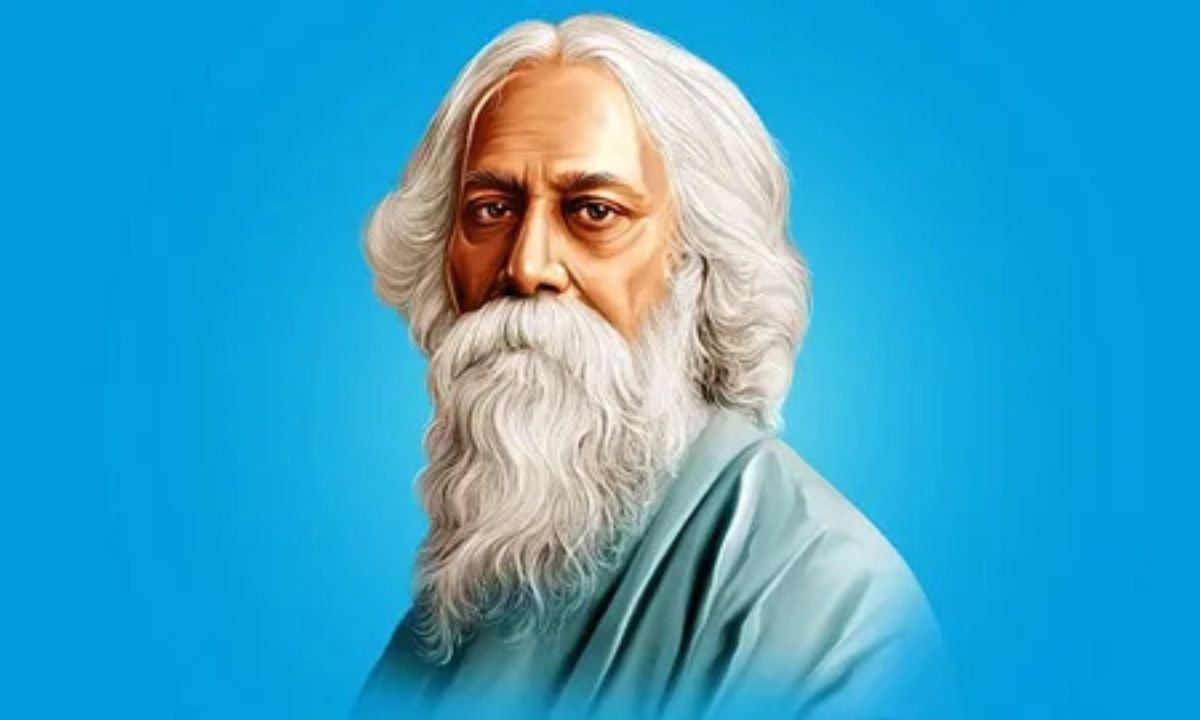
Rabindranath Tagore was a Bengali poet, writer, composer, painter, and educator from Kolkata. People across South Asia still call him Gurudev, which means “respected teacher.”
He is famous for Gitanjali and for winning the Nobel Prize in Literature in 1913. He was the first non-European to win any Nobel Prize. His words also became the national anthems of India and Bangladesh.
Who Was Rabindranath Tagore? (Quick-Reference Facts)
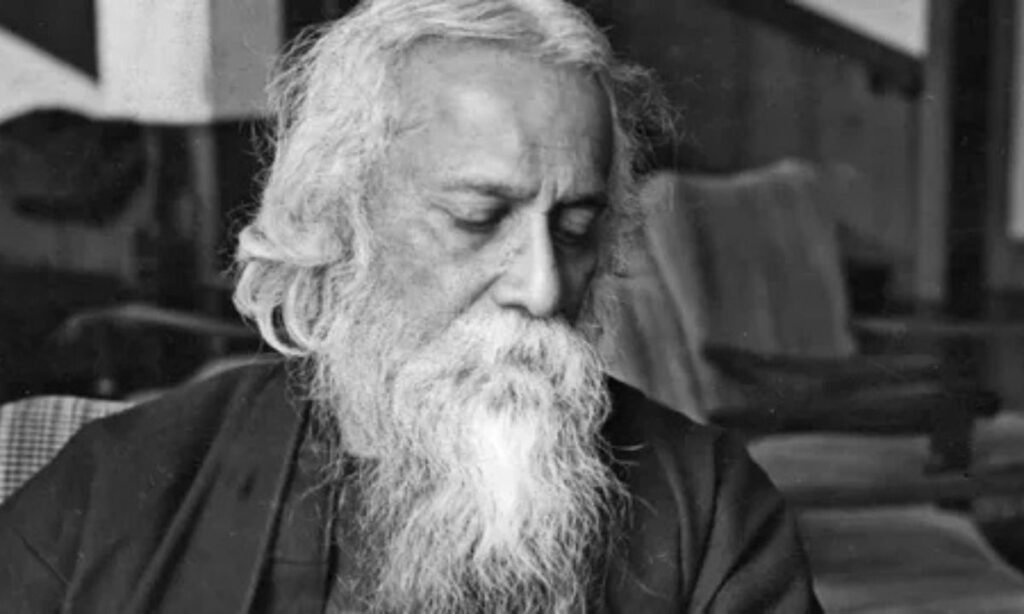
Tagore was born in British India and lived for 80 years. He wrote in Bengali first and then translated many works into English himself.
| Detail | Fact |
| Full Name | Rabindranath Tagore (Bengali: Rabindranath Thakur) |
| Date of Birth | 7 May 1861 |
| Place of Birth | Jorasanko, Calcutta (now Kolkata), Bengal Presidency, British India |
| Date of Death | 7 August 1941 |
| Age at Death | 80 years |
| Age if Alive in 2026 | 165 years |
| Nationality | British Indian by birth (today claimed by India and Bangladesh) |
| Parents | Debendranath Tagore and Sarada Devi |
| Spouse | Mrinalini Devi (married 1883, died 1902) |
| Profession | Poet, novelist, playwright, composer, painter, educator |
| Famous Works | Gitanjali, Gora, Ghare Baire, Rabindrasangit |
| Major Award | Nobel Prize in Literature, 1913 |
| Pen Name | Bhanusimha Thakur (used in his teens) |
| Titles | Gurudev, Kabiguru, Biswakabi |
| Net Worth | Not applicable. No reliable figure exists for a person who died in 1941. |
A Childhood Shaped by Art, Grief, and Rebellion
Tagore grew up in a house full of music, theatre, magazines, and debate. He also grew up with loneliness, because the family servants looked after him more than his busy elders did.
Born Into the Tagore Dynasty of Kolkata
He was the youngest of thirteen surviving children. His family lived in the Jorasanko mansion, a famous center of Bengali culture.
His grandfather, Dwarkanath Tagore, was a rich businessman. His father, Debendranath, was a leader of the Brahmo Samaj, a reform movement.
His siblings were also well known. Satyendranath became the first Indian in the Indian Civil Service. Dwijendranath was a philosopher, and Swarnakumari Devi was a novelist.
A Boy Who Hated School but Loved Words
Young Tagore did not enjoy classrooms. He found them dull and strict, and he later wrote against that style of teaching.
He attended several Kolkata schools for short periods. None of them held his interest for long.
His First Poem at Age Eight
Tagore said he began writing poems around the age of eight. His first poem to appear in print was “Abhilash,” published in 1874 when he was about thirteen.
At sixteen he fooled readers with poems signed “Bhanusimha Thakur.” Many people believed they were the work of an old, lost medieval poet.
His mother, Sarada Devi, died in 1875, when he was about fourteen. That loss stayed with him for life.
Education That Didn’t Follow the Rules
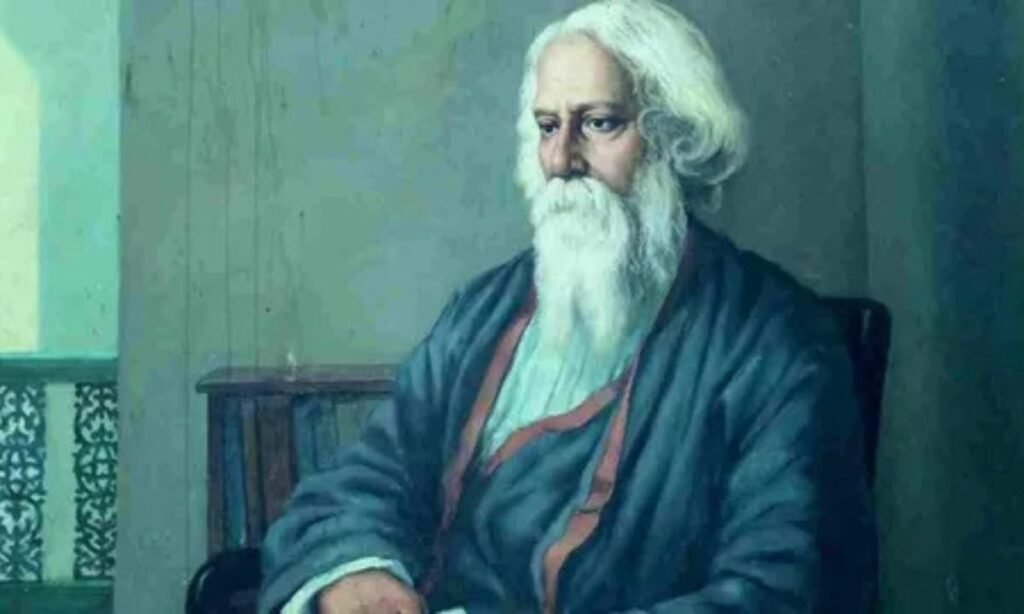
Tagore learned more from tutors, books, and travel than from schools. This also explains why he later built a school of his own.
Home Tutoring and Unconventional Learning
At home, tutors taught him Bengali, Sanskrit, English, science, music, and drawing. He even practiced wrestling early in the morning.
His brothers pushed him to write, sing, and act. In that way the house itself became his classroom.
The England Chapter: Law School and an Early Return
In 1878 his father sent him to England to prepare for a law career. He first stayed in Brighton and then enrolled at University College London.
He did not finish a degree. He returned to India in 1880, and his family let go of the law plan.
What Tagore Really Learned From His Travels
At age eleven, he traveled with his father to the Himalayas. He later described it as one of his freest childhood memories.
By most counts he visited more than thirty countries in his life, including Japan, China, the United States, Argentina, Iran, and the Soviet Union. He used these trips to share ideas, not just to be admired.
In 1930 he also met Albert Einstein, and their conversation about truth and reality was widely reported.
The Years That Made Him a Writer: Estates, Rivers, and Real People
In 1890 his father asked him to manage the family lands. This job changed his writing more than any school could have.
Managing the Family Estates in East Bengal
The estates were in places like Shelaidaha, Shahzadpur, and Patisar. These areas are in present-day Bangladesh and West Bengal.
He met farmers, boatmen, postmasters, and village women. He saw their poverty and their daily hopes up close.
Life on the Padma River and the Birth of His Short Stories
Tagore often lived on a houseboat on the Padma river. He wrote many of his best short stories there, including “The Postmaster” and “Kabuliwala.”
His letters from this time were later collected as Chhinnapatra. They show how deeply he loved rural Bengal.
Personal Tragedies That Shaped His Most Powerful Work
His sister-in-law and close friend Kadambari Devi died in 1884. His wife Mrinalini died in 1902, and his daughter Renuka followed in 1903.
His father died in 1905, and his younger son Samindranath died in 1907. Few writers have faced so many losses in so few years.
Many readers feel the deeper, more spiritual tone of Gitanjali grew from this grief.
Gitanjali and the Nobel Prize That Changed Everything
This is the part of Tagore’s life that made him famous around the world. It is also the part that people most often describe wrongly, so the facts below matter.
What Is Gitanjali and Why Did It Matter?
Gitanjali is a collection of devotional poems. The Bengali edition came out in 1910 with 157 poems. The word means “song offerings.”
In 1912, Tagore translated a selection into English prose. The English Gitanjali had 103 poems and was published in London in late 1912, with an introduction by W.B. Yeats.
The poems speak to God, nature, death, and everyday life. They use simple words and a gentle voice.
W.B. Yeats, André Gide, and the Western World’s Reaction
Painter William Rothenstein first showed the poems to Yeats. Yeats loved them and wrote that they stirred him deeply.
French writer André Gide also admired the work and translated it into French in 1913. Western readers had rarely met a voice like this one.
The First Asian Nobel Laureate in Literature: What It Really Meant
The Swedish Academy announced the Nobel Prize in Literature for Tagore on 13 November 1913. It praised his “profoundly sensitive, fresh and beautiful verse.”
He did not travel to Stockholm for the ceremony. A British official accepted the award for him.
He became the first non-European Nobel laureate and the first Asian winner in literature. For colonized Asia, it was a powerful moment of pride.
His Nobel medal was stolen from the Visva-Bharati museum in 2004. Replicas are now displayed.
| Nobel Prize Fact | Detail |
| Year | 1913 |
| Category | Literature |
| Winning Work (as cited) | Gitanjali: Song Offerings |
| First for | First non-European Nobel laureate |
| Ceremony | He did not attend in person |
Shantiniketan: A School Built on a Completely Different Idea
Tagore did not just criticize schools. He built one.
Why Tagore Rejected Traditional Education
He believed that memorizing facts and fearing teachers killed curiosity. He wanted children to learn through nature, art, and freedom.
His own bad school days shaped this belief.
How Shantiniketan Classes Actually Worked
In 1901 he started a small school at Shantiniketan, near Bolpur, with just five students. Many classes were held outdoors under trees.
Students studied music, drawing, and literature along with regular subjects. The bond between teacher and student was warm, not harsh.
From Ashram to Visva-Bharati University
In 1921 the school grew into Visva-Bharati, a university open to the world. Tagore wanted Eastern and Western ideas to meet there as equals.
He also started Sriniketan nearby in the early 1920s, which focused on rural development. In 1951, Visva-Bharati became a central university of India.
In September 2023, UNESCO added Santiniketan to its World Heritage List.
Tagore’s Literary Universe: Beyond Just Poetry
Many people know only his poems. But Tagore wrote in almost every form.
Poetry Collections That Redefined Bengali Verse
His early collections, like Manasi and Sonar Tori, made Bengali poetry more personal and natural. He moved away from stiff, formal styles.
Here are some of the Rabindranath Tagore books and poetry collections readers search for most.
| Title | Type | Note |
| Sonar Tori (1894) | Poetry | Famous for rural and spiritual themes |
| Gitanjali (1910) | Poetry | Led to the Nobel Prize |
| The Crescent Moon (1913) | Poetry | Poems about childhood |
| Balaka (1916) | Poetry | Focus on movement and change |
| Stray Birds (1916) | Short poems | Popular English collection |
Many readers also look for Rabindranath Tagore poems about nature and love. Short ones in Stray Birds are a good place to start.
Novels That Explored Identity, Love, and Politics
Chokher Bali looks at love and a widow’s inner life. Gora (1910) asks big questions about religion and Indian identity.
Ghare Baire (The Home and the World, 1916) shows the dangers of angry nationalism. Shesher Kobita (1929) is a lighter, modern love story.
Plays That Were Ahead of Their Time
The Post Office (Dak Ghar, 1912) tells the story of a sick child who longs for freedom. Raktakarabi (Red Oleanders) criticizes greed and machine-like power.
His dance-dramas, like Chitrangada, mixed music, movement, and poetry in new ways.
Over 2,000 Songs: The World of Rabindrasangit
Tagore composed about 2,000 or more songs, now called Rabindrasangit. Many sources count around 2,230. They cover love, nature, devotion, patriotism, and seasons.
These songs are still sung at weddings, festivals, and cultural events in Bengal. They are a living part of daily life.
Tagore the Painter: An Artist Who Started in His Sixties
Tagore started painting seriously in his sixties. It began with doodles and cross-outs in his manuscripts.
His first major exhibition was held in Paris in 1930. He left behind roughly two thousand or more artworks, including portraits, landscapes, and dreamlike faces.
Satyajit Ray later turned several of his stories into films, such as Charulata (1964).
Tagore’s Philosophy in Plain Language
Tagore’s ideas are deep but easy to follow. He asked people to see God, nature, and humanity as connected.
The Religion of Man: What He Actually Believed
In 1930 Tagore gave the Hibbert Lectures at Oxford. They were published in 1931 as The Religion of Man.
His main idea was that the divine lives inside human beings and in their love for each other. He believed faith should unite people, not divide them.
His View on Nature, Spirituality, and Human Connection
Tagore felt people were not separate from nature. He believed that living close to trees, rivers, and seasons made us more human.
He was influenced by the Upanishads, Bengali folk music like Baul songs, and the Brahmo Samaj. Yet he never followed one rigid path.
Tagore, Gandhi, and the Colonial Struggle
Tagore loved India, but he did not love every form of nationalism. This made his role in the freedom movement unique.
Friends With a Complicated Bond
Gandhi and Tagore met in 1915 and respected each other deeply. Tagore is said to have called Gandhi “Mahatma,” and Gandhi called Tagore “Gurudev.”
They also disagreed in public. Tagore questioned the spinning-wheel campaign and parts of the Non-Cooperation Movement. He feared it would close India’s mind to the world.
Why Tagore Returned His Knighthood After Jallianwala Bagh
Tagore received a knighthood in 1915. After the Jallianwala Bagh massacre in April 1919, he gave it up.
He wrote a strong letter to the Viceroy in May 1919. He said honors felt shameful when his people were treated so cruelly.
Tagore’s Unique Brand of Nationalism: Why He Wasn’t Exactly a Nationalist
Tagore opposed the British Empire. But he also feared that blind nationalism could breed hatred.
In his 1917 lectures, published as Nationalism, he warned against the idea of the nation as a machine. He supported freedom, but he wanted it built on human values.
Two National Anthems and a Global Legacy
Tagore is often described as the only poet whose words became the anthems of two countries. That claim is true for India and Bangladesh.
| Country | Song | Notes |
| India | Jana Gana Mana | First sung on 27 December 1911 at a Congress session in Calcutta. Adopted as the national anthem on 24 January 1950. |
| Bangladesh | Amar Sonar Bangla | Written in 1905. The first ten lines became the national anthem after independence. |
Jana Gana Mana: India’s Anthem
The anthem comes from the first stanza of a longer Bengali hymn, “Bharato Bhagyo Bidhata.” The full anthem takes about 52 seconds to sing.
Amar Sonar Bangla: Bangladesh’s Anthem
Tagore wrote “Amar Sonar Bangla” during the 1905 Partition of Bengal. People sang it to show unity. It later became the voice of a new nation.
Sri Lanka’s Connection to Tagore
Tagore did not write Sri Lanka’s anthem. That is a common myth.
The anthem “Sri Lanka Matha” was written and composed by Ananda Samarakoon. He studied at Shantiniketan, and many people see Tagore’s influence in the song.
Why Rabindranath Tagore Still Matters Today
Tagore matters because his ideas on education, nature, and unity still feel fresh. He asked schools to teach curiosity, not fear.
He reminds us that love for your country and respect for the world can go together. His songs and poems are still sung in homes, schools, and concerts every day.
In Bengal, Rabindra Jayanti celebrates his birth every year in May.
Frequently Asked Questions
How old was Rabindranath Tagore when he died?
He was 80 years old. He died on 7 August 1941 in Kolkata, in the same Jorasanko house where he was born.
When and where was Rabindranath Tagore born?
He was born on 7 May 1861 in Jorasanko, Calcutta (now Kolkata), India.
Why did Rabindranath Tagore win the Nobel Prize?
He won the 1913 Nobel Prize in Literature for his deeply sensitive and beautiful verse, as shown in Gitanjali.
What is Gitanjali about?
Gitanjali is a collection of devotional poems about God, nature, love, and death. The name means “song offerings.”
Which national anthems did Tagore write?
He wrote India’s “Jana Gana Mana” and Bangladesh’s “Amar Sonar Bangla.”
Why did Tagore return his knighthood?
He returned it in 1919 to protest the Jallianwala Bagh massacre.
What is Rabindranath Tagore’s net worth?
There is no reliable net worth figure. He came from a wealthy landowning family and used much of his money and energy to support Shantiniketan and rural work.
Who started Visva-Bharati University?
Rabindranath Tagore started it in 1921. It grew out of his school at Shantiniketan, which he founded in 1901.
Conclusion
This Rabindranath Tagore biography shows a man who was far more than a poet. He was a teacher, composer, painter, and thinker who spoke for humanity.
His Gitanjali, his Nobel Prize, and his work at Shantiniketan are only the start. His songs for India and Bangladesh keep his voice alive in two nations.
About the Author
Jeorge Belly is a blogger and content creator with over 4 years of blogging experience. He enjoys creating simple, helpful, and meaningful content about messages, birthday wishes, greetings, and special occasions. His goal is to help readers find the right words to share their feelings with family, friends, and loved ones.